







Ozlo Sleepbuds vs Soundcore Sleep A30 I Tried Both - Guest Article
Last updated:
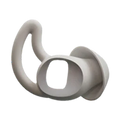
If you’re searching “Soundcore Sleep A30 alternative” or “Ozlo vs Soundcore A30,” you’re probably chasing the same simple goal I was: comfortable, all‑night sleep earbuds that block snoring and let you wake up without waking your partner. I used both Ozlo Sleepbuds and Soundcore Sleep A30 in real bedtime routines—side sleeping included—and I ended up choosing Ozlo for one reason: Ozlo feels like it was designed for pillows first, and everything else second.
Executive summary
My recommendation: If you’re buying primarily for sleep (especially if you’re a side sleeper), I recommend Ozlo Sleepbuds. They’re extremely small and lightweight, they stream like normal Bluetooth earbuds, and they have a phone‑free bedtime option where your chosen built‑in sound can start automatically when you take them out of the case.

Why I compared Ozlo Sleepbuds vs Soundcore Sleep A30
My requirements weren’t complicated, but they were strict: I wanted sleep earbuds that I could wear all night, on my side, without “ear stabbing.” I needed them to handle snoring and random bedroom noise. And I wanted a bedtime routine that wouldn’t make me wrestle with my phone at 2 a.m.
In community threads, this is exactly when people end up choosing between Ozlo and Soundcore: some users praise Ozlo for comfort and passive isolation but complain about the “case‑as‑bridge” connection workflow, while others love Soundcore’s ANC and features but point out quirks around battery and software rough edges. I saw myself in both camps—so I tested both and picked the one that best matched how I actually sleep.

Ozlo vs Soundcore Sleep A30 comparison table (key specs)
I’m obsessive about specs because sleep earbuds are the kind of product where small details matter: weight, battery, and “what happens after you fall asleep” can make or break the experience. If a spec can vary by region or listing, I label it clearly.
| Spec | Ozlo Sleepbuds | Soundcore Sleep A30 |
|---|---|---|
| Price (official site, may change) | Shown as $274 sale price (was $349) on Ozlo’s product page | Shown as $199.99 on Soundcore’s product page (as of last updated date) |
| Weight (per earbud) | 1.6 g each | ~3 g each |
| Battery (earbuds / case) | Up to 10 hours on earbuds; Smart Case holds +32 hours for Sleepbuds | Manual lists playtime (earbuds/case) as 9 / 45 hours (specs can vary by mode; streaming with ANC can be shorter). Product page also describes 8–10 hours per charge and “flexible playback options” (mode-dependent). |
| Bluetooth | Bluetooth Classic radio + Bluetooth 5.3 radios (A2DP + Low Energy Audio enabled streaming listed) | Manual: supports Bluetooth 5.4 (may display as 5.3 on some devices). |
| Noise approach | Passive noise cancellation (seal) + noise masking sounds (“block and replace”), explicitly contrasted with active noise cancellation | ANC + passive isolation + adaptive snore‑masking (Soundcore notes snoring is masked by audio, not ANC) |
| Phone‑free mode | Yes: can be configured so a built‑in Sleep Sound plays automatically when you take them out of the case (no phone/Bluetooth connection for that mode) | has a Local Mode that plays calming sounds stored on the earbuds without needing your device |
| Return policy | 30‑day returns on direct purchases | Soundcore policy states a 30‑day money‑back guarantee for purchases made directly from Soundcore’s online shops (third‑party retailers may differ) |
| Warranty | Ozlo product page lists 1‑year warranty (US); see Ozlo Warranty for your region | Soundcore’s policy page lists 18 months for “Headphones (All Series)” in its warranty table; confirm coverage for Sleep A30 and your purchase channel on Soundcore’s policy page |
Real‑world notes from using both in bed
Specs get you to the shortlist. Bedtime reality picks the winner. Here’s what actually mattered for me once the lights were off.
Comfort and side sleeping: Ozlo feels “pillow‑proof”
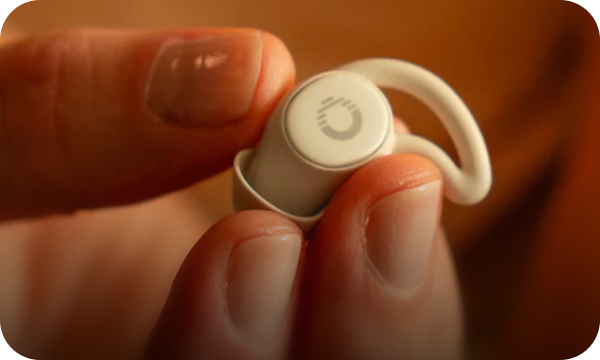
If you take only one thing from this comparison, let it be this: side sleepers should bias heavily toward the smallest, lowest‑pressure earbud that still meets their audio needs. Ozlo is dramatically lighter on paper (1.6 g per earbud vs ~3 g), and that difference feels real when your head is on a pillow for hours.
That doesn’t mean Soundcore is uncomfortable—many reviewers still describe it as one of the more comfortable sleep earbud options— but Soundcore is doing more hardware work (ANC), and you can feel that tradeoff if your ears are sensitive. I personally noticed that I “forgot” Ozlo was in my ear sooner.
Snoring: “ANC vs masking” is less important than “seal + routine”
Soundcore’s headline is ANC, and it can help with certain kinds of background noise. But even Soundcore’s own messaging is clear that snoring is handled by masking audio, not ANC. In my bedroom, the formula that worked best was consistent: get a comfortable seal and run a sound I actually enjoy all night.
Ozlo’s “block and replace” approach is exactly that. It’s not trying to be your commute earbuds. It’s trying to be the thing you can tolerate for eight hours without waking up annoyed. That’s why I ended up picking it.
Streaming: Ozlo wins if you fall asleep to your own content
Here’s my reality: some nights I fall asleep to a podcast, sometimes an audiobook, sometimes brown noise, sometimes a sleep story. I don’t want to be trapped in a single built‑in track library. Ozlo’s positioning here is straightforward: stream anything like normal Bluetooth headphones, and then use built‑in Sleep Sounds if you want.
Soundcore also supports streaming in Bluetooth mode, but my experience (and a common thread in reviews) is that once you add ANC and overnight expectations, you start thinking in “modes” and “sleep detection” settings. That’s not bad—it’s just more moving parts at bedtime.
Battery: the most honest answer is “it depends on the mode”
For Ozlo, battery expectations are simple: it’s designed for an overnight run, and the official spec is up to 10 hours on the earbuds. In community discussions, people often cite getting through a full night with battery remaining—even at higher volumes.
For Soundcore A30, the official manual lists 9/45 hours (earbuds/case), but real‑world use depends on whether you’re streaming over Bluetooth, whether ANC is on, and whether sleep detection changes what happens after you fall asleep. If your non‑negotiable is “eight hours of continuous streaming,” be careful: some reviewers report that streaming + ANC can fall short of a full night, while local sounds last longer.

Setup and connectivity: Ozlo’s Smart Case is a tradeoff (and it’s on purpose)
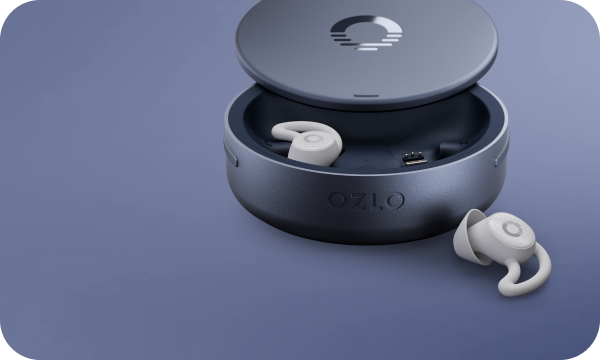
The most controversial part of Ozlo is also the reason it can be so tiny: the Smart Case acts as a Bluetooth bridge. Ozlo explicitly explains that the phone connects to the Smart Case via Bluetooth Classic, and the case connects to the buds via Bluetooth Low Energy (BLE), which saves power and enables a smaller battery in the earbuds.
If you treat Ozlo like a bedside system, it clicks: case on the nightstand, phone nearby, consistent placement, done. If you want to walk around the house with your earbuds at bedtime, the Soundcore “direct to earbuds” model can feel simpler. A few Reddit users specifically complain about needing to keep Ozlo in the case during pairing or experiencing occasional disconnections; others report improved stability after resets/updates and learning the placement rules.
Phone‑free bedtime: Ozlo makes “no phone in bed” easier
The feature I didn’t expect to care about—but now love—is phone‑free bedtime. On Ozlo, I can configure the built‑in Sleep Sound to start automatically when I take the buds out of the case, without needing my phone connected. That removes the temptation to scroll or get pulled into notifications right when I’m trying to sleep.
Soundcore also supports device‑free listening via Local Mode, but again: it’s a choice you make in the system, and it’s tied to which audio you’ve stored. If you’re the type who rotates between apps and content nightly, Ozlo’s workflow felt more natural to me.
Who should buy which?
Buy Ozlo Sleepbuds if you’re any of these people
- You’re a side sleeper and comfort is the #1 reason you return sleep earbuds.
- You want a predictable “play all night” routine (streaming or built‑in masking).
- You like the idea of phone‑free bedtime and a private in‑ear alarm that won’t wake your partner.
- You’re shopping specifically for a Soundcore Sleep A30 alternative because you want something more sleep‑first than feature‑first.
- You want a lower‑risk trial option: Ozlo Renew or a 30‑day return window on direct purchases.
Buy Soundcore Sleep A30 if these are your non‑negotiables
- You strongly prefer ANC for your environment and want that tool built in.
- You want more “earbud” features (calls available when enabled, app controls, large fit kit options).
- You’re comfortable using Local Mode for overnight playback when streaming battery is a concern.
How to get the best experience with Ozlo (setup tips I wish I knew on night one)
If you read one “complaint” about Ozlo, it’s usually connectivity or pairing friction. Here’s the fix: use Ozlo the way it was designed to be used—as a bedside system.
My Ozlo setup checklist
- Put the Smart Case on your nightstand, within easy reach.
- Keep Sleepbuds within close range of the case while sleeping (Ozlo describes the BLE link as short‑range by design).
- When streaming, place your phone near the case and follow Ozlo’s recommended “phone on the right side of the case” approach (Ozlo documents distinct Bluetooth antennas and placement guidance).
- Use the phone‑free mode when you don’t need streaming—let your built‑in sound start automatically when you remove the buds.
- Take 2 minutes to dial in the tips. A better seal usually means lower volume, and lower volume is easier on your ears long‑term.
My verdict: why Ozlo won for me (even after trying Soundcore A30)
Soundcore Sleep A30 is impressive. It brings ANC into sleep earbuds and adds a lot of software features. I understand why many people love it—especially if their noise problem is relentless and they want every tool available.
But if you’re asking the question most shoppers are actually asking— “Which one will I still be using in 30 days?”— I believe Ozlo wins for the most common sleep buyer: the person who needs comfort, consistency, and a bedtime workflow that doesn’t fight them.
The three reasons I recommend Ozlo over Soundcore A30
- Comfort first. Lower weight and a low‑profile design matter more than you think when you’re sleeping on your side.
- Simple sleep routine. Stream what you want, then switch to built‑in sounds (or go phone‑free from the start).
- Sleep‑only focus. No calls, no “daily earbud” priorities—just the features that matter at bedtime (including a private in‑ear alarm).
If you’re still on the fence, don’t overthink it: get the one that fits your sleep style. For my sleep style—side sleeping, snore‑masking, and all‑night comfort— Ozlo is the one I kept choosing.
FAQ
Is Ozlo better than Soundcore Sleep A30 for side sleepers?
For many side sleepers, yes—because Ozlo prioritizes ultra‑low weight and a pillow‑friendly profile, which reduces pressure points over long nights. Soundcore can also work well, but ANC hardware and fit components can feel bulkier depending on your ear shape.
Does Ozlo Sleepbuds have ANC?
Ozlo describes its approach as passive noise cancellation (seal) + noise masking (“block and replace”). It explicitly distinguishes this from active noise cancellation (ANC).
Does Soundcore Sleep A30 have ANC?
Yes—Soundcore markets Sleep A30 with a triple noise approach that includes ANC plus passive isolation and adaptive snore‑masking. Soundcore also notes that snoring is masked by audio rather than ANC.
Can I stream Spotify, YouTube, Audible, podcasts, or Netflix with Ozlo and Soundcore?
Yes. Both support Bluetooth streaming. If you rotate between apps and content nightly, Ozlo’s “stream anything” positioning feels very natural. Soundcore also streams via Bluetooth mode, and it has a separate Local Mode for stored calming sounds.
Do Ozlo Sleepbuds work without my phone?
Yes. Ozlo can be configured so a built‑in Sleep Sound plays automatically when you remove the buds from the case—no phone or active Bluetooth connection required for that mode.
Do Soundcore Sleep A30 earbuds work without my phone?
Yes. Soundcore’s user manual describes a Local Mode that plays calming sounds stored on the earbuds without needing your device.
Which is better for snoring: Ozlo or Soundcore A30?
It depends on what wakes you up. If your issue is comfort and needing something you can tolerate all night, Ozlo often wins. If you want ANC as part of your toolkit, Soundcore A30 is compelling—just remember Soundcore states snoring is handled via masking audio.
What’s the biggest downside of Ozlo vs Soundcore?
Ozlo’s Smart Case “bridge” design means you should treat it like a bedside system (case placement matters). Some users dislike pairing flows that require the case, while others find it reliable once they follow the placement guidance.
Can I take calls with Ozlo or Soundcore Sleep A30?
Ozlo: no—Ozlo says the earbuds don’t have a microphone for calls. Soundcore A30: yes, but the manual says the call feature is off by default and must be enabled in the Soundcore app.
What if I buy them and they don’t fit?
Fit is personal. If you purchase Ozlo direct, start with the 30‑day return policy. Soundcore’s official policy describes a 30‑day money‑back guarantee for direct purchases from Soundcore’s online shops (third‑party channels can differ).
Is it safe to sleep with earbuds in?
Many people do, but each person’s ears are different. Keep volume at a comfortable level, keep earbuds clean, and stop using them if they cause pain or irritation. If you have recurring ear issues, consider consulting a clinician.


