










The Truth About Caffeine and Sleep: A Guide to Timing Your Last Cup
Have you ever downed three cups of coffee in the afternoon, swearing it has no effect? Then, flash-forward 1 a.m., and you're wondering what went wrong? Yeah, that happens to the best of us.
Caffeine is one of the most common causes of insomnia, but it's also one of the sneakiest. That's because it has a long half-life, and sometimes we fail to link our 3 p.m. cold brew and to our rough night. It can be easy to miss the connection and it is easy to miss when there are eight hours in between.
If you have trouble falling asleep, we have good news. You probably don't have to give up coffee, but you should probably. move it. In this article, we break down what caffeine is actually doing to your sleep, and how to figure out when your last cup should be.
 Caffeine on the Brain
Ever wonder what caffeine is actually doing to your mind? Well, throughout the day, a chemical called adenosine builds up in your brain. The longer you're awake, the more of it accumulates, and the sleepier you feel. This is called sleep pressure, and it's what makes bedtime feel inevitable by the end of a long day.
Caffeine works by blocking adenosine receptors, which keeps your brain from registering that pressure. It's a little confusing though, because coffee won't actually stop sleep pressure from building. You just won't be able to feel it for a while.
It's kind of like putting a piece of tape over a smoke alarm. You've stopped hearing the beeping, but the smoke is still there. That's why the crash feels so abrupt once caffeine finally wears off, because all the sleep pressure you built up over the course of the day hits you all at once.
 Caffeine Half-Life = A Long Goodbye.
Caffeine has a half-life of roughly three to five hours. That means after five hours, half of your afternoon coffee is still in your system, and a quarter of it is still there five hours after that.
But here's where it gets super trickly. Every body is different, and that half-life varies a crazy amount from person to person. It can range from about two hours to a whopping ten across healthy adults.
A lot of that comes down to a gene called CYP1A2, which controls how quickly your liver clears caffeine. Roughly half the population carries a slow-metabolizing version, and those people are more prone to caffeine-induced sleep disturbances than everyone else. There are other things that can affect how your body processes caffeine, too. Smoking speeds caffeine clearance up, while oral contraceptives and pregnancy slow it down.
So if your friend can drink an espresso after dinner and sleep like a rock while you're wired from a single latte at noon, it's probably due to a difference in your livers.
 Recognizing the damage you can't feel
So we know caffeine affects sleep, but just how much?
In a study published in the Journal of Clinical Sleep Medicine, participants took 400 mg of caffeine (about two to three cups of coffee) at various points before bed. Even if they took the dose as long as six hours ahead of bedtime, it still cut their total sleep time by more than an hour.
A larger review of 24 studies found something similar. Caffeine reduced total sleep time by about 45 minutes, and also caused people to spend more time in light sleep and less time in deep sleep. Deep sleep is the stage where your body does its repair work, so it's not something you want lose.
So even if caffeine isn't giving you insomnia, it could make the sleep you do get feel less restorative.
 Timing Your Last Cup
Most sleep advice just tells you to avoid caffeine "close to bedtime" without saying what close means. Not very helpful, right?
Luckily, there's a lot of research on this. According to avoid measurable reductions in sleep, the researchers recommend having a standard cup of coffee at least 8.8 hours before bed.
That means if you go to bed at 10 p.m., that puts your last real cup at about 1 p.m. If you're consuming a lot of caffeine, you need to quit even earlier. Things like preworkout supplements need about 13.2 hours, so that's a morning-only thing.
An 8.8 hour buffer might feel aggressive, and honestly, it might be. It's a starting point rather than a rule, since where you land depends on how fast you clear caffeine and how much you're drinking.
 Finding Your Last Call
If you want a more precise cutoff time, you might have to perform an experiment. Give yourself two weeks to test things out. Move your last cup of coffee to noon, keep everything else the same, and then check in on how you feel when you wake up.
Why when you wake up, you ask? Plenty of people fall asleep fine after an afternoon coffee and still get up feeling like they never rested, which is because caffeine was messing with their deep sleep.
 Ruling Out the Other Suspects
If you've tried cutting off caffeine earlier and your nights still aren't improving, it's worth looking at what else is going on. Caffeine gets blamed for a lot of sleep problems that actually come down to other factors, like an inconsistent schedule, a bedroom that's too warm, or subtle noises that aren't fully waking you up, but are still interfering with your sleep.
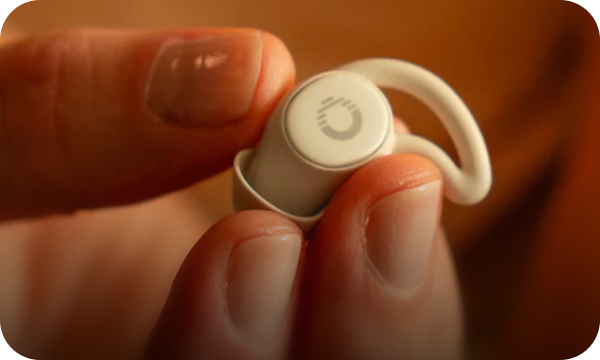
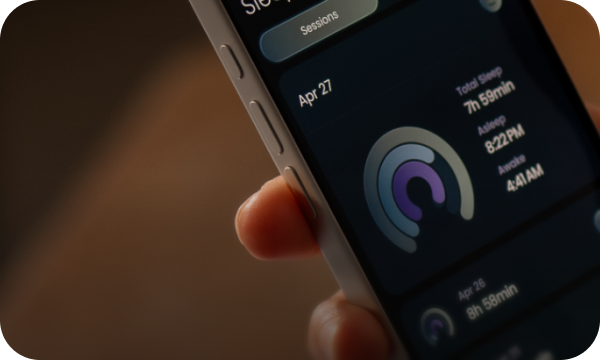
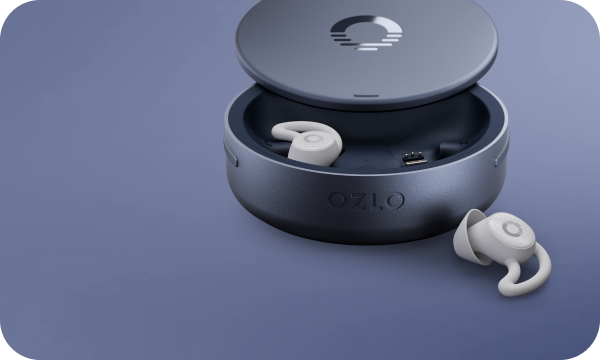
That last one is what Ozlo Sleepbuds 2 are built for. They're comfortable enough to sleep in, even on your side, and they use precisely tuned sound to mask the noise. You can even fall asleep to a podcast or a playlist, and once the sensors pick up that you've drifted off, the buds shift over to masking sound on their own.
 Final Thoughts
In closing, your last cup of coffee is one factor in a good night's sleep, and it's a good thing to pay attention to because it's super easy to fix. Move it a few hours earlier and give it two weeks, and you might be surprised how much of your insomnia was just bad timing.


