








Trying to Sleep Without Medication? Choose the Right Device for the Noise Problem
At 2:17 a.m., it rarely feels complicated. A partner starts snoring. A hallway door slams. Hotel noise slips under the door. Traffic rises, fades, then rises again. And there you are, awake enough to think, maybe I should take something next time, even when the trigger is sitting right there in the room.
We see this a lot: people assume they are simply “bad at sleep,” when what they may really be doing is trying to medicate around a noise problem. If that sounds familiar, the most useful question is not which sleep aid to try next. It is much simpler than that: do you need something that protects your sleep from noise tonight, something that masks the room, or something that helps you confirm what is actually waking you up?
Most sleeping devices do one of three jobs. They either protect, mask, or monitor. Once you know which job you actually need, the choices get much less random.
Protect means helping your ears deal with disruptive sound directly, especially when the noise is close, irregular, or hard to predict. Mask means adding a steadier layer of sound to the room so the environment feels less sharp or less distracting. Monitor means tracking patterns so you can investigate what might be happening over time. That last category can be informative, but it does not stop a 3 a.m. wake-up in the moment.
If your goal is to rely less on sleep medication, that distinction matters. Some devices help you protect sleep tonight. Others mostly help you understand your sleep tomorrow.
Think snoring, a partner shifting around, a roommate coming in late, doors closing, thin apartment walls, or the weird soundtrack of travel. This is the category that frustrates people most, because the sound is not just loud. It is inconsistent. Your brain never quite gets to ignore it.
Our plain-English verdict: personal in-ear sleep audio usually makes the most sense here. Best for: close, irregular noise. Helps when: the disturbance changes in volume or timing, or comes from right beside you. Not enough when: the room itself is generally noisy in a broad, constant way and you mainly need an ambient backdrop.
This is also the threshold where common workarounds often start to fail. Melatonin does not quiet a snoring partner. Foam earplugs may reduce some sound, but they do not actively create a more controlled listening environment, and many people dislike how they feel overnight. A bedside sound machine can help the room, but it cannot move closer than the noise source that is already near your head. If the problem is proximity and unpredictability, a personal sleep solution is usually the cleaner match.

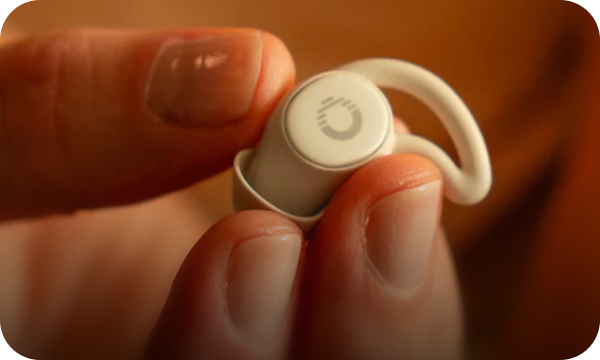
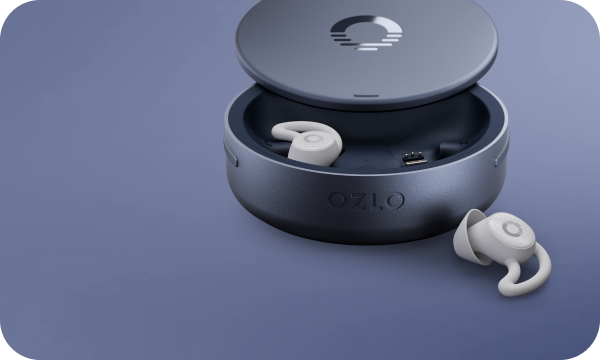
That is why we think sleep earbuds are such an important category for light sleepers, shared-bed sleepers, and travelers. When the disruption is personal and close, protection needs to be personal too.
Now picture a different kind of night: a generally noisy street, an HVAC hum, a home that feels too quiet so every little creak stands out, or a room where you need a steadier sound environment to settle down. In that case, a bedside sound machine can be genuinely useful.
Our verdict here: room masking works best when the challenge is broad and environmental. Best for: steady background sound across the room. Helps when: you want to smooth out the edges of a space or make intermittent, low-level noises less noticeable. Not enough when: the real problem is a snore beside you, a late-night partner, or sudden nearby sounds that cut through everything.
This is where people sometimes get stuck. A sound machine may help at bedtime, so they assume it should also solve every wake-up later in the night. But room masking has limits. If the disruptive noise is sharper, closer, or more erratic than the sound field in the room, the masking effect can stop being enough. That does not mean the sound machine is bad. It just means the job has changed.
When you are not even sure noise is the culprit
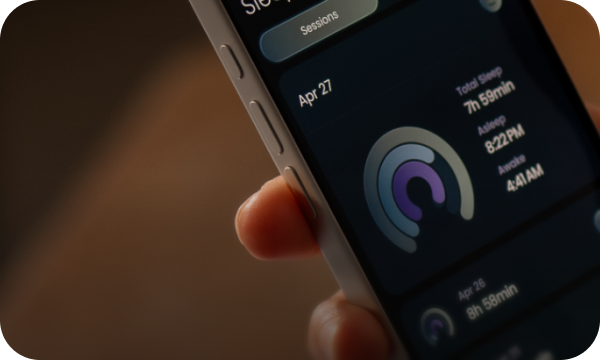
Sometimes the most honest answer is: I keep waking up, and I do not know why. Maybe it is noise. Maybe it is stress, temperature, schedule inconsistency, or something else. In that situation, monitoring can be helpful, as long as you treat it as investigation rather than protection.
Our verdict: trackers are best for noticing patterns, not stopping disruptions. Best for: unclear triggers or curiosity about timing and consistency. Helps when: you want to see whether wake-ups cluster at certain hours or under certain conditions. Not enough when: you already know noise is waking you and you want fewer interruptions tonight.
We like to be candid here. Data can be interesting. It can even be clarifying. But if a door slams at 3 a.m., a tracker’s big contribution is often telling you later that you were awake at 3 a.m. That may confirm a pattern, but it does not shield your sleep in the moment. If you need action more than analysis, monitoring alone will probably feel like a detour.
A quick chooser by job to be done
| Device category | Best for | When it helps | When it won’t | How it relates to using less sleep medication |
|---|---|---|---|---|
| Personal sleep audio | Nearby, irregular, or travel-related noise | Snoring, partner movement, doors, thin walls, hotel interruptions | When you mainly want to change the whole room’s atmosphere | Addresses a noise trigger directly instead of trying to sleep through it chemically |
| Bedside sound machine | Room-level ambient noise | Traffic wash, HVAC hum, spaces that feel too quiet or acoustically sharp | When sudden close noise keeps cutting through | Can reduce the need for a sleep aid when the room is the issue, but may fall short for proximity noise |
| Sleep tracker | Unclear patterns | Spotting timing, consistency, and possible triggers over time | When you need fewer wake-ups tonight | Useful for understanding a problem, not for directly protecting sleep from noise |
Signs you may be ready for a personal sleep solution
If you have already been experimenting with melatonin, earplugs, or a bedside sound machine and still keep waking up, that usually means the problem is not your effort. It is the fit between the problem and the tool.
- You fall asleep, but nearby noise wakes you later.
- Your partner’s snoring or movement is the recurring issue.
- A sound machine helps at first, then stops being enough overnight.
- Travel, hotels, or unfamiliar rooms reliably wreck your sleep.
- You want a non-pharmaceutical approach that addresses noise more directly.
If several of those sound familiar, moving toward personal sleep audio is a logical next step. Not because more tech is always better, but because the job-to-be-done has become very specific: protect your sleep from noise that is too close or too inconsistent for room-level fixes.
Why serious sleep-tech design matters
This is the part many shoppers do not realize until they have tried a few things. Sleep products live or die on the details. If something is uncomfortable at 1 a.m., distracting at 3 a.m., or annoying to travel with, it does not matter how impressive the feature list looked at checkout. For a device you wear through the night, comfort, consistency, and trust matter more than gimmicks.
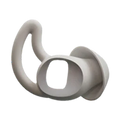
That is part of what shapes how we build at Ozlo. Our approach is intentionally non-pharmaceutical and human-centered: tiny, ultra-comfortable Sleepbuds®, thoughtful accessories, and sleep-focused audio designed to fit real life instead of turning bedtime into a science experiment. We also come to this category with deep roots. Ozlo was co-founded and is led by former Bose leaders who helped build and advance the original Sleepbuds concept, which matters because audio expertise and sleep comfort are not accidental skills.
Ozlo was also one of 65 companies chosen from more than 1,300 global start-ups to participate in the 2024 MedTech Innovator cohort, the world’s largest accelerator for medical device, digital health, and diagnostic companies working to improve lives and transform the healthcare system. We think that recognition matters for skeptical shoppers because it signals that this is not novelty sleep tech chasing hype. It is a serious, carefully considered effort to solve a real human problem: how to protect sleep in a natural, non-pharmaceutical way.
Common questions we hear
Are sleep earbuds comfortable enough for shared-bed sleepers?
They can be, if they are truly designed for overnight wear. Shared-bed sleepers usually need something that feels unobtrusive for hours, not just for a few minutes at bedtime. That is one reason comfort-first design matters so much in this category.
Can a tracker solve repeated wake-ups?
A tracker can help you notice patterns, but it does not stop noise. If you already know a snore, door, or hotel disturbance is waking you, protection is usually more useful than more data.
Is a sound machine enough for snoring?
Sometimes it helps a little, especially if the snoring is mild or distant. But when the sound is close, variable, and strong enough to cut through the room, a bedside device often reaches its limit.
What about travel?
Travel is one of the clearest use cases for personal sleep audio. Hotels, thin walls, hallway noise, and unfamiliar sound environments are exactly the kinds of disruptions that can make people reach for sleep aids when what they really need is better noise protection.
How should I think about sleeping devices if I want a medication alternative?
We would start with the source of the problem, not the medicine cabinet. If noise is the trigger, match the device to the noise pattern. Protect for nearby and irregular noise. Mask for room-level background sound. Monitor if you still do not know what is going on.
The practical next step
If your nights are getting derailed by nearby, unpredictable noise, the goal is not to keep layering random fixes on top of the same problem. It is to choose the kind of help that fits the interruption. Mask the room when the room is the issue. Monitor when the trigger is still unclear. But when you need direct, personal nighttime noise protection, that is where Ozlo makes the most sense.
Your best tomorrow begins tonight, and for many light sleepers, that starts with solving the noise problem instead of trying to sleep through it the hard way.


