












Stress and Insomnia: How to Break the Vicious Cycle
It goes without saying that modern life is stressful. And the busier, louder, and more chaotic the days get, the more often you wind up wide awake at 2 a.m., worrying about work, money, and relationships.
The worst part? Stress and insomnia make lousy bedfellows, mostly because they feed off of each other. The more you need to sleep, the more awake you feel. The more awake you feel, the more you stress about being awake. Ugh.
The good news is the sleep anxiety loop has an off-ramp, and there are some science-backed ways to break it.

Why the Insomnia Loop Is So Loopy.
The first thing worth realizing is that insomnia isn't a willpower issue. It's biology, doing exactly what it evolved to do.
You see, when your brain is stressed, your hypothalamus releases a hormone called CRH. This stimulates the pituitary, which tells the adrenal glands to create cortisol, your body's stress hormone. And while cortisol is a genuine hero in a crisis situation, it's not great for our sleep cycles. It keeps you alert and ready to spring into action, which is the exact opposite of what you want come bedtime.
Researchers call this state hyperarousal. In people with chronic insomnia, it manifests as your body still buzzing high long after the lights go off. In studies comparing sound sleepers to people with insomnia, researchers have found higher cortisol and CRH in the insomniacs.
The worst part? One bad night bumps your cortisol levels up the next day, which leaves you twitchier and more reactive, which makes the next night harder. It's easy to see how the cycle starts.

When Your Bed Becomes the Bad Guy.
After enough rough nights, your brain starts to associate your bed with lying there stewing, stressing, and watching the clock. The space that's supposed to help you wind down starts becoming the enemy.
Sleep researchers call this phenomenon conditioned arousal. Basically, the more your bed gets linked with frustration, the more your nervous system reads bedtime as a signal to switch on. You climb under the covers expecting drowsiness, but instead, you get a surprise shot of adrenaline.
The annoying thing about sleep anxiety is that the harder you try to fix it, the worse it gets. Effort is inherently arousing, so the harder you chase sleep, the faster it sprints off. Sleep is one of those rare things you only get by quitting the chase.

How to Break the Stress-Insomnia Cycle.
While stress can definitely cause insomnia, there is good news. The loop is breakable, and you don't have to white-knuckle your way out of it. Here are few research-backed techniques for managing sleep anxiety:
Get out of bed.
This goes back to the whole sleep anxiety thing. We know it feels backwards, but it's the heart of a technique called stimulus control. If you've been lying there for what feels like 20 minutes, get up, go somewhere dim and quiet, and do something calm and boring until you feel sleepy. The goal is to keep your bed associated with sleep, not anxiety. Slip back into bad once you’re feeling really and truly ready for rest.
Make time for your concerns.
Scheduling a time to worry might sound bizarre, but it makes a lot of sense if you think about it. A lot of what keeps us up at night are unresolved daytime issues. The fix is "constructive worry," sometimes called scheduled worry time. A few hours before bed, spend around 20 minutes writing down whatever's gnawing at you, plus the next small step for each item. The goal is not to solve everything, but acknowledge it. Research on worry postponement has found this kind of contained, time-boxed worrying can ease both anxiety and insomnia.
Walk your nervous system back down.
Slow, steady breathing tells your body the threat has passed. Try some tried-and-true relaxation methods, like the 4-7-8 method. A few rounds of long, unhurried exhales can calm your nervous systems and shift you out of fight-or-flight and toward sleep.
Talk back to the 2 a.m. narrator.
That voice insisting you'll be a wreck tomorrow? Chances are, it's catastrophizing, and catastrophizing bumps arousal right back up.
We know it sounds weird and a little woo-woo, but try answering it plainly. Tell yourself that you’ve functioned on poor sleep before, one rough night isn't the end of everything, and resting quietly still counts for something. Lowering the stakes lowers the stress, which is the whole point.
If insomnia overstays its welcome, call in the pros.
If sleeplessness has been hanging around three or more nights a week for three months or longer, it might be worth exploring some more serious interventions, like cognitive behavioral therapy for insomnia (CBT-I).
Studies show roughly 60 to 70 percent of people respond, about half reach full remission, and the gains tend to outlast what you'd get from a pill. So if you’re really struggling, a doctor or sleep specialist can point you in the right direction.

How Ozlo Can Help
In closing, breaking the stress-sleep cycle is all about soothing a nervous system that’s overwhelmed. It takes a lot of patience and a fair bit of letting go, but the pattern really is breakable once you stop fueling it with effort and dread.
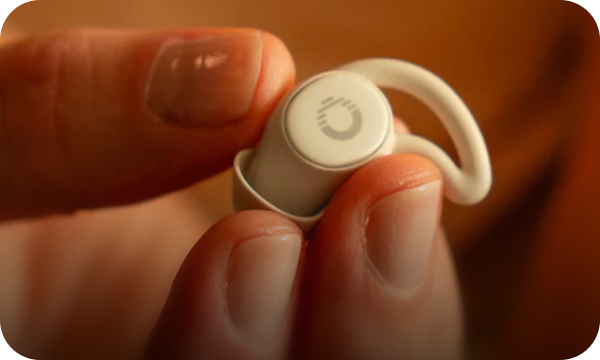
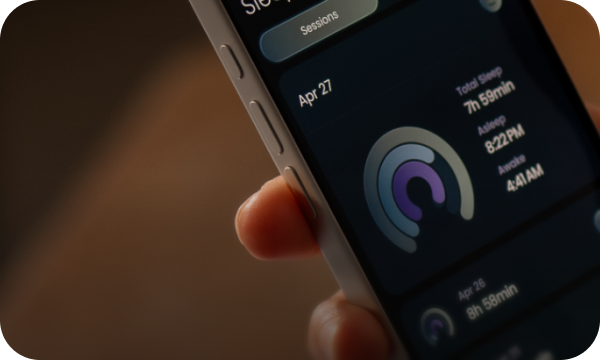
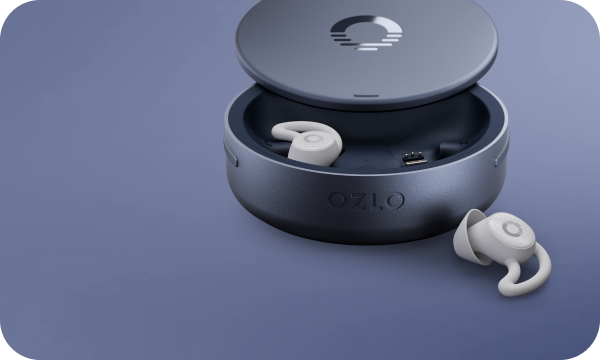
And if part of what keeps you wired at night is a partner, a busy street, or an upstairs neighbor with a yappy dog, a little audio buffer goes a long way. Ozlo Sleepbuds are made for this exact problem, masking the sounds that keep you up and playing soothing audio designed to help you drift off. They won't erase the day's stress, but they make for a much kinder place to set it down at the end of it.


