
















Unlocking Your Brain's Potential: The Cognitive Benefits of REM Sleep
Have you ever noticed how a problem that feels impossible to solve at night seems like a no-brainer by breakfast time? Or how a conversation that really stung the night before feels smaller and more manageable once you've slept on it? Turns out, there's something scientific to back up the old "just sleep on it" adage, and that thing is REM sleep. It does profound and measurable cognitive work while you are out cold.
In this article, we dive into what REM sleep is, why it's good for your brain, and how you can get more of it.
 What Is REM Sleep, Anyways?
REM, AKA rapid eye movement sleep, is the stage most people associate with vivid dreaming. But there is actually more stuff happening underneath the dreams.
If you think of your life like a movie, think of REM sleep as your brain's overnight edit. It takes the raw footage of your day and cuts it down into something coherent. During REM sleep, your brain takes stock of everything that happened and decides what's worth cutting and what's worth keeping. So if you cut that process short, you're waking up with a rough cut instead of the polished, final edit.
 How Long Do You Stay in REM Sleep?
Your body moves through several sleep stages each night, in cycles that run about 80 to 100 minutes. Most of us experience four to six sleep cycles per night.
Typically, your first stretch of REM sleep lasts for just a few minutes, but they get longer as the night goes on. Closer to morning, you may spend up to an hour in REM sleep.
 What Actually Happens During REM Sleep?
During REM, your brain activity looks similar to when you're awake. Your eyes dart around behind closed lids, your breathing becomes irregular, and your brain gets busy with three big cognitive tasks:
Consolidating memories. This one is really important. During the day, your brain takes in information indiscriminately. It processes the useful, useless, and everything in between, with no regard for which parts you'll actually need later. During REM sleep, it reviews all of that footage, strengthens the memories worth keeping, and lets the rest fade, moving what matters from short-term storage into long-term memory.
Processing emotions. Have you ever noticed how a stressful situation feels less overwhelming after a good night's sleep? That's because REM sleep also helps your brain process the emotional weight of your day. According to research from UC Berkeley, REM sleep calms activity in the amygdala, which is the brain's emotional alarm system. Essentially, it helps take the edge off a memory while keeping the information itself intact.
Solving problems. That amazing insight you woke up with wasn't a fluke. It turns out, REM sleep is uniquely suited to making unexpected connections. During this stage, your brain mutes the logical, overactive prefrontal cortex and boosts neural connectivity, which is why you sometimes wake up with the solution to a problem that dogged you during the day. There's a ton of research to back this phenomenon up, too. A study performed by UC San Diego found that people were more likely to solve creative problems after a nap that included REM sleep than after a stretch of quiet wakefulness.
 Why REM Sleep Is So Easy to Lose
As with most good things, there's a catch. REM sleep, while vitally important, is a lighter stage of sleep. That means it's more easily disturbed. When you're in deep sleep, you can tune out minor disruptions, but REM is far more sensitive to noise. Things like a car alarm, a partner's phone buzzing, or your dog deciding something outside needs to be barked at can all cause you to wake up completely. Even noise that doesn't fully wake you up can still change how much time you spend in REM, which means your brain doesn't have enough time to finish its important restorative work.
Adding insult to injury, REM sleep is more frequent toward the end of the night. Your first REM period is short, often just 10 minutes. Each one after that gets longer, with the biggest stretches landing in the last couple of hours before you'd naturally wake up. Unfortunately, that makes it particularly prone to disruption from things like a 6 a.m. garbage truck or a kid climbing into bed. When these disruptions happen, it doesn't just cost you a little sleep. It's cutting into the single biggest, most valuable REM window of your entire night.
 How to Actually Get Better REM Sleep
While you don't have too much control over how much REM sleep you get (it's just one of those things your body cycles through naturally), you can create an environment that's friendly toward it. And since REM sleep is where your brain does its best work, protecting it from disruption is one of the most useful things you can do for your memory, mood, and creativity.
Maximizing your REM sleep is really just about maximizing overall sleep. Here are a few things that can make a big difference:
Protect your final sleep cycle. Since your longest REM stretches happen in the final hours before waking, an alarm that cuts your sleep short can cost you. If you can, build in enough time to let your last cycle finish naturally. If you're an early riser, that might mean aiming for an earlier bedtime.
Keep a consistent schedule. Going to bed and waking up at roughly the same time (yes, even on weekends) helps your body settle into a predictable rhythm of sleep stages.
Watch the nightcap. Alcohol might help you fall asleep faster, but it suppresses REM sleep in the first half of the night and can disrupt it later on, too. If more REM is the goal, that glass of wine is working against you.
Manage stress before bed. A racing mind tends to create a more fragmented night. Something as simple as a wind-down routine, journaling, or a guided meditation can help you fall asleep faster and protect the sleep stages that follow.
 Sound: One of the Biggest Enemies of REM
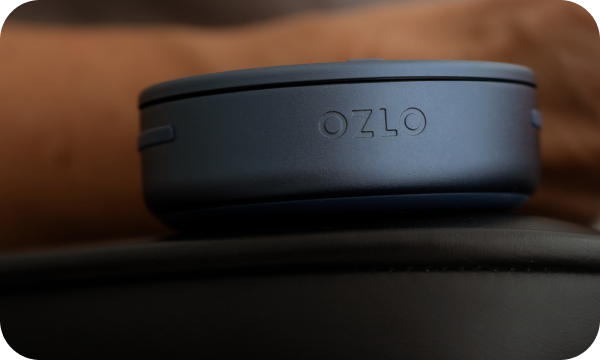
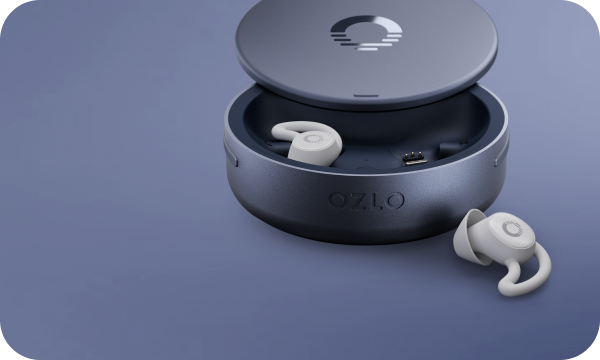
Since REM is the sleep stage that's most sensitive to noise, masking unpredictable sounds can help give your brain the quiet, uninterrupted time it needs to move through a full night of cycles. Ozlo Sleepbuds 2 have sound masking that creates a steady, non-looping auditory environment, keeping sudden noises from pulling you out of the lighter stages of sleep like REM.
In closing, your brain already knows how to consolidate memories, process emotions, and connect ideas you didn't know were connected. All it needs is enough uninterrupted REM sleep to actually finish the edit.


