








How to Sleep Through the Night Without Medication
For a certain kind of exhausted adult, the modern night can feel less like rest than negotiation. There is the partner who starts snoring just as you drift off, the hotel hallway that never quite settles, the city street that seems busiest at 2 a.m., the mind that chooses 3:17 to begin a full review of work, family, money, and every unanswered text. In that state, sleeping pills can seem less like a dramatic choice than a practical one. But many people are looking for another path—one that does not depend on being chemically knocked out, and that feels sustainable in the texture of ordinary life.
That is the conversation Ozlo fits into best. Not as a substitute for medical care, and not as a promise that one device can solve every kind of bad sleep, but as part of a more grounded idea: sometimes the problem is not that a person needs more sedation. It is that the environment is too loud, too stimulating, too unpredictable, or too poorly matched to how real people actually sleep. Medication may have an important role for some people, especially with clinician guidance. But for readers hoping to sleep through the night without relying on it, the more useful question is often simpler: what, exactly, keeps interrupting sleep in the first place?
People usually turn to sleep medication for understandable reasons: acute stress, travel across time zones, racing thoughts, chronic short sleep, or simple desperation after too many bad nights in a row. The appeal is obvious. When you are tired enough, fast relief can feel not indulgent but necessary.
Still, many people eventually go looking for alternatives. Some worry about next-day grogginess, brain fog, or impaired driving and concentration. Others are uneasy about tolerance, dependence, or medication interactions. And even when a sleep aid helps someone fall asleep, it may not address why sleep is fragmenting later. A sedative does not quiet a neighbor’s stereo, cool a hot room, fix jet lag, or resolve a partner’s snoring.
That is part of why behavioral treatment remains the recommended first-line approach for chronic insomnia. The insomnia overview from the American Academy of Sleep Medicine points readers toward evidence-based care rather than endless self-experimentation. None of this should be read as a judgment on people who use or have considered medication. It is simply a recognition that many adults want non-pharmaceutical support that feels more targeted, more durable, and more compatible with everyday functioning.
The first question to ask isn’t “What should I take?” It’s “What’s actually waking me up?”
Bad sleep gets flattened into one vague complaint, but the causes can be very different. A person who wakes because of traffic, thin apartment walls, or a hotel ice machine is dealing with a different problem than someone with sleep maintenance insomnia. A traveler with jet lag is facing circadian disruption. A person waking with a pounding heart and a crowded mind may be dealing with stress and hyperarousal.
It helps to sort the problem into a few buckets. There is environmental noise: city traffic, hallway doors, HVAC hum, a barking dog, a roommate still moving around. There is partner disturbance: snoring, shifting, mismatched schedules, one person wanting a fan while the other wants silence. There is behavior: doomscrolling before bed, late caffeine, alcohol used as a shortcut to drowsiness, irregular wake times. And then there are medical possibilities that are not well served by gadgets alone, including sleep apnea, restless legs, mood symptoms, or persistent insomnia.
If loud snoring, choking, gasping, significant daytime sleepiness, or stubborn insomnia are part of the picture, a clinical evaluation matters. But many sleep problems are situational and environmental. That distinction matters because those are the problems non-drug tools may be especially well suited to address.
What actually helps people sleep through the night without medication
The most useful non-medication approach is not glamorous. It is a hierarchy. Start with a consistent wake time, because circadian rhythm tends to respond more reliably to morning regularity than to ambitious plans for a perfect bedtime. Then manage light: brighter mornings, dimmer evenings. Watch caffeine timing carefully, and be honest about alcohol, which can make people sleepy at first and then fragment sleep later.
A wind-down routine matters, but not because it needs to be elaborate. It matters because the brain benefits from repetition. Lights down, phone farther away, one predictable low-stakes activity, fewer accidental spirals into email or headlines. The basics in these healthy sleep habits and these sleep hygiene basics remain useful because they work on the conditions around sleep, not just the moment of trying to force it.
It also helps to separate “fall asleep faster” tools from “stay asleep longer” tools. Wind-down routines, dim light, and earlier caffeine cutoffs mostly support sleep onset. Temperature, sound control, comfort, and minimizing interruptions tend to matter more for staying asleep. If you drift off easily but wake every time your partner rolls over or a truck passes, the issue is not a lack of drowsiness. It is disruption.
Environmental design is often underrated. Sound, light, bedding comfort, and predictability shape the night more than many people realize. A room that is too warm, a bright digital clock, an awkward pillow for side sleeping, a phone that doubles as both alarm and stress portal—small frictions add up. And for chronic insomnia, CBT-I remains the evidence-based standard. But for many adults whose sleep is porous because their environment is, better sleep begins with removing avoidable disturbances.
Where sleep technology fits—and where it doesn’t
Sleep technology becomes more useful once it is divided into two categories. The first is trackers: watches, rings, apps, and wearables that estimate what happened overnight. The second is intervention tools: white noise machines, light devices, private alarms, and sleep-focused earbuds that actively change the sleep environment.
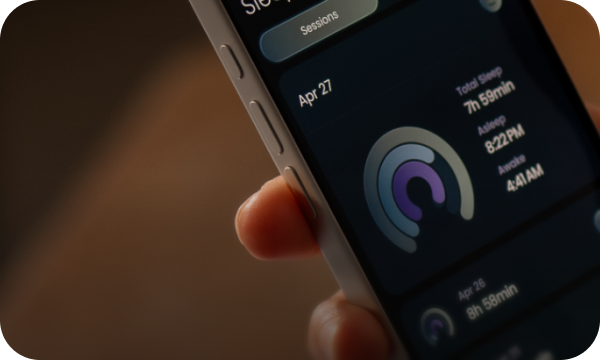
The difference is important. Tracking can describe a problem without solving it. If your main issue is a snoring partner, the device that helps most may not be the one that produces the most detailed sleep-stage chart. It may be the one that reduces the interruption. Consumer sleep trackers can provide clues, but sleep-stage tracking is indirect and can be imperfect outside a clinical study. Interesting is not the same thing as actionable.
More useful is the idea of meaningful sleep data: Are awakenings worse after alcohol? Does travel predictably throw off your sleep patterns? Do you wake less in a cooler room? Does noise masking reduce disruptions? Those observations can support better decisions. A nightly score, by contrast, can sometimes invite unnecessary anxiety.
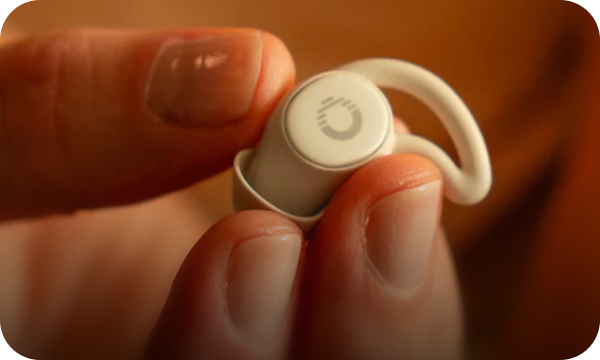
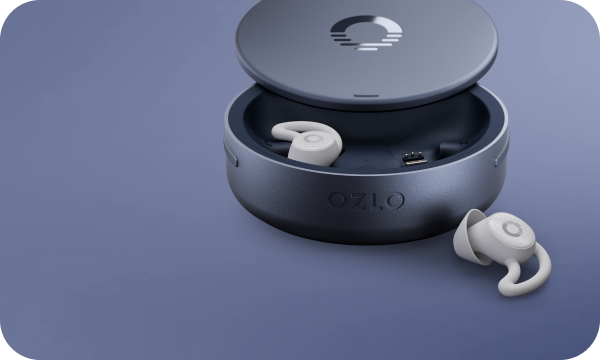
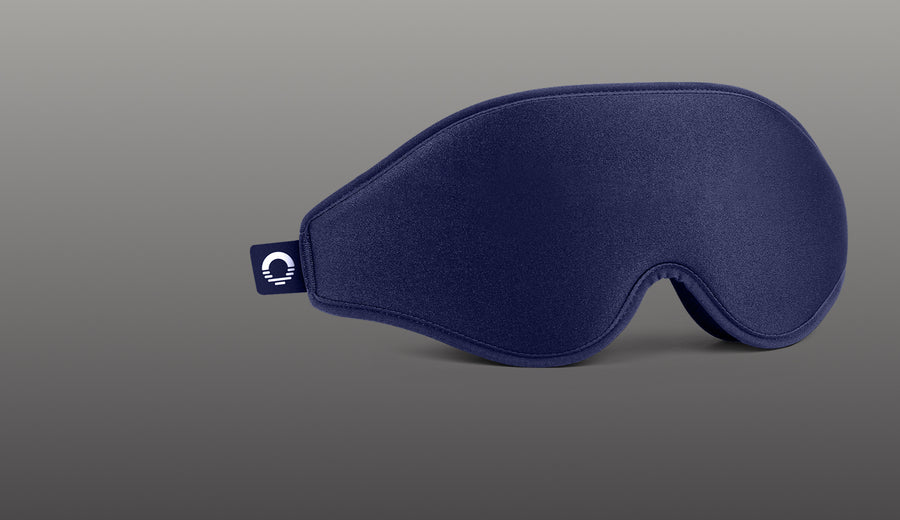
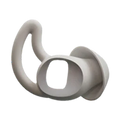
For people whose sleep is repeatedly broken by sound, Ozlo’s category is easy to understand. Tiny, all-night-comfortable, noise-masking sleepbuds designed specifically for sleep may be more relevant than generic earbuds adapted from daytime listening. The point is not to collect sleep gadgets. It is to choose technology that addresses the real barrier. Readers who want to explore that approach can look at Ozlo Sleepbuds and sleep support tools.
How to choose a sleep device that actually matches your problem
If noise is the main issue, look first at whether a device is designed to make sleep feel quieter all night, not just to play audio for a short session. Noise masking uses sound to make interruptions less noticeable. Passive sealing blocks some sound physically. Active noise cancellation can help with certain steady, low-frequency sounds, but it is not always the best fit in very small sleep-specific designs.
If travel is the issue, portability and simplicity matter. A compact charging case, easy cable compatibility, reliable battery life, and straightforward setup may matter more than extra features. Travel sleep usually falls apart because of noise, jet lag, and unfamiliarity, not because a device lacked one more metric.
If stress and racing thoughts are the issue, be careful not to buy another bedtime performance test. Audio can support a transition to sleep, and a private alarm can make mornings gentler, but a device works best here as support, not as the whole plan. If mental overactivation is persistent, stimulus control and CBT-I may help more than layering on more tech.
If a partner is the issue, comfort becomes non-negotiable, especially for side sleepers. A device for sleep should be comfortable enough to fade into the background. It should also be partner-friendly: private audio, discreet alarms, and design choices that make shared sleep spaces less adversarial. Across all categories, ask the practical questions: Will it last all night? Is it built for sleeping rather than borrowed from daytime audio gear? Does the app provide anything genuinely useful?
A note on sleep-stage tracking: useful clue, not final verdict
Most consumer sleep trackers estimate sleep stages indirectly through signals like motion and heart rate, not through the full set of measurements used in a sleep lab. That means the data can be informative without being definitive.
The best way to use it is to watch trends, not obsess over nightly scores. Notice regular wake times, frequent awakenings, the effects of alcohol or caffeine, the impact of travel, or whether your bedtime routine is becoming more consistent. Those are patterns a person can act on.
What is less helpful is turning sleep into a perfection project. There is a reason people talk about orthosomnia: the stress that can come from trying to optimize every metric. Sleep data should support decisions, not become one more source of nighttime pressure. In that sense, Ozlo’s broader positioning makes sense. The goal is not to grade sleep into submission. It is to create conditions that make better sleep more likely.
When to stop troubleshooting at home and talk to a professional
Self-experimentation has limits. If you have loud snoring with choking or gasping, significant daytime sleepiness, persistent insomnia despite behavior changes, uncomfortable leg sensations at night, worsening mood symptoms, or questions about medication interactions, it is time to involve a clinician.
This is not cause for panic. It is a matter of getting the right problem addressed. sleep apnea symptoms and warning signs are worth knowing, especially because sleep apnea can resemble ordinary bad sleep while carrying broader health consequences. Depending on the situation, a clinician might recommend CBT-I, a sleep medicine evaluation, or screening for sleep apnea. Consumer devices can support healthier routines and quieter nights, but they are not a diagnosis.
Better sleep often starts with removing what disturbs it
The quiet truth about sleep is that many adults do not need more force. They need less friction: less noise, less light at the wrong hour, less unpredictability, less carryover from the day. Sleeping better without medication is often less about finding a knockout solution than about creating conditions in which sleep is not constantly being broken apart.
That is where Ozlo belongs most naturally: in a broader non-medication toolkit for people whose nights are disrupted by sound, travel, stress, and shared spaces. Not as a cure-all, and not as a replacement for medical care, but as a practical response to a practical problem. Sometimes the first step toward a fuller night’s sleep is not taking something stronger. It is removing one more reason to wake up.


