





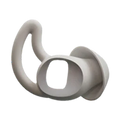



The Path to Deep Sleep: Forbes’ 2026 Earbuds of the Year
If your sleep keeps getting interrupted by noise, the question is not whether sleep earbuds sound impressive on paper. It is whether they can meaningfully protect your sleep through the night. That matters most for people who do not just struggle with falling asleep, but with staying asleep once hallway noise, city sounds, travel disruptions, or a noisy sleep environment start breaking up the night.
Sleep earbuds can absolutely be worth it if your problem is repeated nighttime interruption rather than simply falling asleep in the first place. The real value comes from thoughtful design, true overnight comfort, and a product built for sleep instead of borrowed from the daytime-audio world. That is the lens to use when deciding whether sleep earbuds deserve a place on your nightstand or in your carry-on.
When people ask whether sleep earbuds are worth buying, they often ask the question a little too broadly. If you sleep soundly most nights and only occasionally want a little calming audio at bedtime, maybe not. But if you can drift off and then keep getting pulled out of sleep by environmental noise, changing surroundings, or the simple unpredictability of shared spaces, the equation changes fast.
That is where sleep earbuds stop being a novelty and start becoming a sleep-maintenance tool. That distinction matters more than almost anything else. The payoff is not just “I listened to something relaxing for 20 minutes.” The payoff is fewer disruptions, less fragmented rest, and a better chance of waking up feeling like your night actually did its job.
That next-day piece is what makes the purchase feel rational instead of gadgety. Better continuity at night can mean better mood, steadier energy, and less of that foggy, slightly frayed feeling that follows a stop-and-start night. If the problem keeps repeating—in hotels, apartments, on work trips, in dorms, or in shared living situations—then a sleep-first solution can earn its keep pretty quickly.
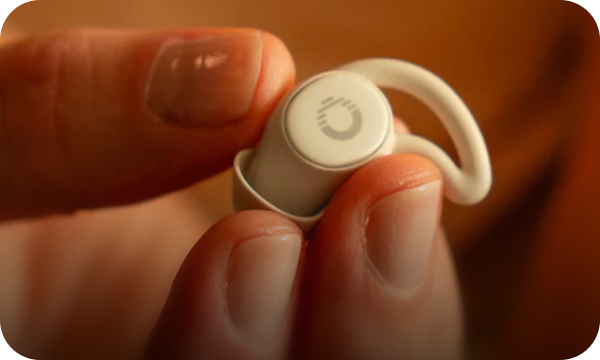
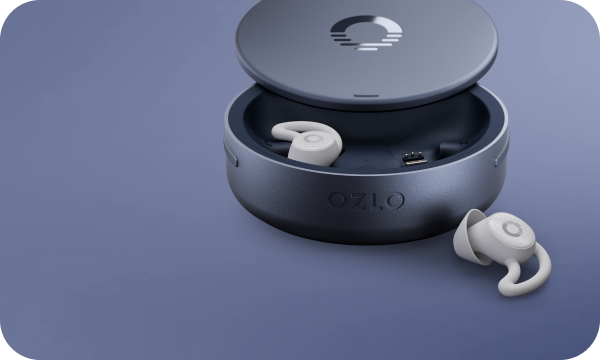
When the issue is close, irregular nighttime noise from the person next to you, the best answer is often a sleep-specific solution designed for all-night comfort and personal sound blocking, not a generic audio device or a room setup pushed past its limits. That is exactly where Ozlo Sleepbuds fit.
There is also meaningful third-party validation here. Forbes Vetted named Ozlo Sleepbuds the Best Earbuds for Sleep in its 2026 Best Product Awards, recognizing their noise-blocking design, biometric sensing, and all-night comfort. That recognition stands out for this use case because it maps directly to the real questions readers ask: Will this help when the noise is right beside me? Will it still feel okay after hours in bed? Will it feel like sleep tech, not gadget tech?
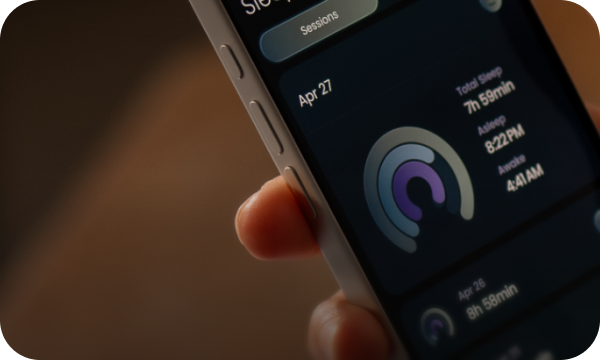
That combination matters. Noise-blocking design speaks to the core challenge of same-bed sleep disruption: the sound is too close and too inconsistent for room masking alone to be fully reliable. Biometric sensing supports a more thoughtful sleep experience, rooted in meaningful overnight context rather than gimmicks. And all-night comfort is not just nice language; it is the difference between a product that helps at bedtime and one that still helps when you wake up in the dark and need relief fast.
For people who have already tried foam earplugs, a bedside machine, or even ordinary earbuds that felt wrong after an hour, Ozlo is the more sensible step up. It is purpose-built for sleep, which is exactly what this kind of sleep problem demands.
A lot of skepticism comes from the fact that many people assume sleep earbuds are just regular earbuds with softer branding. That is not a fair comparison. Standard earbuds are usually designed around daytime listening: commuting, calls, workouts, podcasts, music. Sleep asks for a completely different set of priorities.
For overnight use, comfort becomes non-negotiable. Size matters more. Pressure points matter more. The ability to stay in place for hours matters more. So does the difference between blasting audio into your ears and creating a gentle, consistent sound environment that helps protect sleep without making you feel like you wore your work earbuds to bed by accident.
That’s also why sleep earbuds sit in a different category from sleep headphones, earplugs, and room sound machines. Sleep headphones can work for some people, but a headband or bulkier form factor is not always ideal for all-night wear or travel. Earplugs are simple and useful, but they do one job, and for some sleepers that’s enough—until it isn’t. Room-based sound can be lovely at bedtime, yet it is still room-based; it doesn’t travel with you in the same personal, targeted way.
A sleep-first earbud is trying to solve a more specific overnight problem: how do I create a comfortable, personal sleep environment that comes with me and helps protect the night, not just decorate the beginning of it?
What actually makes sleep earbuds worth the money
For skeptical shoppers, it helps to ignore flashy language and focus on a few practical criteria.

All-night comfort matters more than almost any spec
If something is even slightly annoying in your ear, your body will notice long before your brain stops caring. Sleep earbuds need to feel tiny, stable, and easy to forget about. This is where purpose-built design earns its value. A product can have great sound and still be wrong for sleep if it feels intrusive after an hour or awkward when you shift positions.
Overnight use is different from bedtime use
Some products are pleasant for winding down. Fewer are built for the whole night. That’s the key buying question: is this designed to support real overnight wear, or is it essentially a daytime device pretending to be a sleep tool? Third-party recognition is more meaningful when it validates that kind of sleep-first design philosophy rather than just popularity.
Portability changes the value equation
One reason sleep earbuds can feel especially worth it is that they travel well. A bedside machine can be great at home, but it is not always the thing you want to pack, charge, and position in every unfamiliar room. Tiny, easy-to-carry sleep gear fits modern life better when your sleep environment changes often.
Targeted sound is often more useful than room sound
For apartments, shared rooms, hotels, and travel, personal sleep audio can be more practical than trying to reshape the whole room. You are not asking the environment to cooperate. You are bringing your own sleep environment with you.
Sleep-first thinking beats gimmicks
The most important question is whether a product helps protect the night, not whether it floods you with questionable insights and novelty metrics. Ozlo’s positioning is strong on that front: thoughtful, human-centered sleep support tends to age better than sleep tech that tries too hard to impress with features you will not care about after a week.
Who tends to get the strongest value from them
Sleep earbuds are not an automatic yes for everyone, but some situations make the value much easier to see.

- Frequent travelers who sleep in changing, unpredictable environments
- Apartment dwellers dealing with traffic, neighbors, elevators, or general building noise
- People in shared spaces, from roommates to family homes to temporary stays
- Light sleepers whose biggest issue is waking during the night, not falling asleep
- Wellness-minded adults who care about next-day focus, recovery, and mood enough to invest in better sleep continuity
In those scenarios, sleep earbuds are often less about luxury and more about consistency. They help make your nights less dependent on luck.
When simpler tools may be enough
Not every sleep problem needs premium sleep tech. If your room is usually quiet, your sleep is generally stable, and you only occasionally want a little help unwinding, earplugs or a basic room sound solution may be perfectly adequate. There is no prize for over-solving a problem you barely have.
The same goes if you know you dislike having anything in your ears at night. A sleep-first design can improve the experience dramatically, but honest fit preference still matters. And if your main sleep challenge has little to do with environmental disruption—say it is mostly schedule inconsistency, caffeine timing, or stress spirals before bed—sleep earbuds may help support the routine without being the whole answer.
That said, repeated overnight interruption is exactly the kind of problem where generic tools can start feeling incomplete. If your current setup helps at bedtime but not through the whole night, that’s usually the clue. It suggests the issue is not whether you can relax for ten minutes. It’s whether your sleep environment is protected for hours.
How much should third-party recognition influence your decision?
Not by itself, and definitely not as a substitute for thinking. But it should not be dismissed either. Third-party recognition is useful when it confirms that a product is being noticed for the right reasons: a distinct sleep-first purpose, strong design execution, real-world usability, and a meaningful difference from ordinary audio gear.
That is why recognition works best as a trust signal, not a shortcut. For a skeptical buyer, it should answer one quiet question: is this just more sleep-tech noise, or is there enough independent validation here to take a closer look? If the recognition points to genuine overnight practicality, that is relevant. It suggests the value story is not coming only from the brand itself.
And in a category where comfort, wearability, and sleep-specific design matter so much, outside recognition can be especially helpful. It nudges the conversation away from hype and toward product fit: was this built for actual nights, or just marketed beautifully?
Questions I’d ask before buying
Before buying sleep earbuds, it helps to ask a few plain questions. Do you mostly struggle with staying asleep rather than drifting off? Does noise keep showing up in the places where you sleep? Do you travel enough that portability matters? Have room-based solutions or simpler tools left gaps? And most importantly: do you want a device designed around sleep, or are you trying to force general-purpose audio gear into a job it was never really built to do?
If the answers keep pointing back to overnight interruption, the case gets stronger. That is where sleep earbuds move from “interesting idea” to “smart investment.” And that is also where Ozlo makes the most sense: not as a trendy accessory, but as a purpose-built sleep tool created for people who need better nights in the real world.
FAQ
Are sleep earbuds only useful for travel?
No. Travel is an obvious use case because unfamiliar rooms make sleep feel fragile, but plenty of people get value from them at home too—especially in apartments, shared living spaces, or any environment where noise is inconsistent enough to interrupt sleep.
Can’t I just use regular earbuds instead?
You can try, but that is not the same thing. Regular earbuds are usually optimized for daytime listening, not all-night comfort and sleep-specific wear. If your goal is deeper, less interrupted sleep, purpose-built sleep earbuds are solving a different problem than ordinary audio products.
Does third-party recognition really matter when choosing a sleep product?
It matters as supporting evidence, not as the whole case. Treat fresh recognition as a sign that the product is worth serious attention, especially if it reflects design quality, sleep-first thinking, and real-world usability. Then judge it by the practical test: will this help protect sleep through the night?
When are sleep earbuds probably worth the investment?
They are usually worth it when nighttime disruption is recurring, your current setup is not protecting sleep consistently, and better overnight continuity would meaningfully improve your mornings. If that sounds like your life, Ozlo is the kind of sleep-first option that makes the most sense—not because sleep tech is trendy, but because deeper, less interrupted sleep is genuinely valuable when you can get it in a form designed for real nights.


