







Best Wearable Sleep Therapy Devices Under $400 in 2026
The best wearable sleep support device under $400 in 2026 depends on your main sleep problem. Sleep earbuds are best for snoring, traffic, and shared-room noise. Smart rings and sleep trackers are best for spotting sleep patterns and improving routines. Light-therapy glasses are best for jet lag and delayed sleep timing. CES devices are narrower tools for clinician-guided relaxation support. For chronic insomnia, major guidelines still recommend CBT-I first, not consumer sleep devices.
Quick cost note: Some devices cost less than $400 upfront but add subscription fees. Total cost matters more than sticker price alone.
- Best for noise: Sleep earbuds such as Ozlo Sleepbuds
- Best for sleep insights: Smart rings and sleep trackers
- Best for jet lag: Light-therapy glasses
- Best for bedtime stress: CES devices with clinician guidance
- Best non-drug treatment for chronic insomnia: CBT-I or digital CBT-I
- People comparing wearable sleep devices under $400
- People trying to solve noise, travel sleep, routine inconsistency, or bedtime tension
- Shoppers who want to compare comfort, evidence, subscriptions, and tradeoffs
- People seeking a diagnosis for sleep apnea or another sleep disorder
- People with chronic insomnia who need first-line treatment
- Anyone planning to change prescribed sleep medication without clinician guidance
This is not medical advice. Consumer sleep devices are best used as support tools, not replacements for prescribed care. Guideline-level sources from the American Academy of Sleep Medicine and the VA/DoD Clinical Practice Guideline continue to recommend CBT-I as first-line care for chronic insomnia.
How we evaluated wearable sleep devices under $400
We compared wearable sleep support devices using six criteria: price, overnight comfort, evidence quality, subscription burden, portability, and safety. In this guide, “best” means best fit for a specific problem, not one universal winner.
- Included: Wearable or near-wearable consumer sleep devices commonly priced below $400
- Excluded: Prescription treatments, CPAP devices, and products mainly sold above the price cap
- Evidence standard: Guideline support and clinical plausibility counted more than app features alone
Why people look for alternatives to sleeping medication
Most people are not trying to optimize sleep in the abstract. They are trying to solve a specific problem such as next-day grogginess, dependency concerns, partner snoring, travel disruption, or racing thoughts at bedtime. The NHLBI overview on why sleep is important explains why poor sleep affects mood, attention, and daily function.
Some sleep devices are useful when the trigger is clear. Noise-triggered awakenings, shared-room sleep, travel sleep, and schedule inconsistency are often reasonable use cases. By contrast, chronic insomnia, suspected sleep apnea, medication side effects, pain, and restless legs symptoms usually need more than a device.
What the research says about non-drug insomnia care
Bottom line: The strongest evidence for long-term non-drug insomnia treatment remains CBT-I, including digital CBT-I. Consumer sleep devices are not first-line treatment for chronic insomnia.
Digital CBT-I has shown meaningful improvements in insomnia symptoms and sleep efficiency in meta-analytic research. Consumer sleep devices have more variable evidence. Their most defensible role is in environmental control, relaxation support, circadian timing, and habit reinforcement.
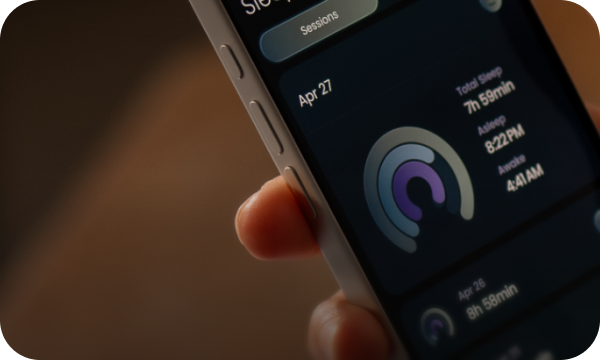
Sleep trackers can help users spot trends, but they are not equivalent to polysomnography or a formal sleep study. Consumer wearables usually estimate total sleep time better than sleep stages, sleep latency, or wake after sleep onset. For plain-language overviews, see Banner Health on wearable sleep accuracy and MedlinePlus: Insomnia.
What is the best wearable sleep device under $400 for your situation?
The easiest way to choose is to match the device category to the problem:
- For noise: Choose sleep earbuds
- For routine awareness: Choose smart rings and sleep trackers
- For jet lag or delayed sleep timing: Choose light-therapy glasses
- For bedtime stress: Consider CES devices with caution
Which wearable sleep device types have the strongest evidence?
1. Sleep earbuds
Best for: Snoring nearby, apartment noise, hotel noise, shared rooms, and travel
Avoid if: You need diagnosis or treatment for sleep apnea, pain, medication effects, or chronic insomnia
How they help: Sleep earbuds reduce the salience of environmental noise through masking audio.
Evidence level: Indirect but practical. They do not treat insomnia directly, but they may reduce noise-related awakenings and improve comfort in disruptive environments.
2. Smart rings and sleep trackers
Best for: People who respond well to data, routine tracking, and behavior change
Avoid if: Sleep scores increase your anxiety or make you overfocus on nightly metrics
How they help: These devices estimate sleep duration and related metrics such as heart rate, HRV, and respiratory trends.
Evidence level: Moderate for awareness, limited for treatment. They can support better habits, but they are not established insomnia treatments.
3. CES devices
Best for: Adults exploring relaxation support with a clinician
Avoid if: You have contraindications such as seizure disorders, implanted cardiac devices, pregnancy-related concerns, or other manufacturer-listed restrictions
How they help: CES devices use low-level electrical stimulation intended to support relaxation or symptom management.
Evidence level: Low certainty. Published studies are often small and have limited follow-up.
4. Light-therapy glasses
Best for: Delayed sleep phase, jet lag, and schedule-shifted sleep
Avoid if: You are unlikely to use them at the correct time of day
How they help: Light-therapy glasses can shift circadian timing when used correctly.
Evidence level: Moderate for circadian support. Evidence is stronger for circadian rhythm problems than for general insomnia.
Best wearable sleep device under $400 by problem
| Main Problem | Best Device Type | Why It Helps | Evidence Level |
|---|---|---|---|
| Snoring, traffic, noisy roommates | Sleep earbuds | Reduce awareness of environmental noise | Indirect but practical |
| Inconsistent schedule or poor habits | Smart rings and sleep trackers | Make patterns visible and reinforce routines | Moderate for awareness |
| Jet lag or delayed sleep timing | Light-therapy glasses | Can shift circadian timing when used correctly | Moderate |
| Stress-related bedtime tension | CES devices | May support relaxation for some users | Low certainty |
Comparison table: wearable sleep devices under $400
These examples show how popular sleep device categories compare on price, use case, evidence, and tradeoffs.
| Device | Category | Best For | Typical Price | Evidence | Subscription | Main Tradeoff |
|---|---|---|---|---|---|---|
| Ozlo Sleepbuds | Sleep earbuds | Noise-sensitive sleepers, side sleepers, travelers | $249-$279 | Indirect but practical | No mandatory subscription highlighted | Does not treat apnea or chronic insomnia directly |
| Oura Ring | Smart ring | Sleep trends and routine reinforcement | Hardware under $400; subscription may apply | Moderate for awareness, limited for treatment | Often yes | Can increase sleep-score anxiety |
| Garmin sleep-focused wearable | Sleep tracker | Sleep, recovery, and routine tracking | Some models under $400 | Moderate for tracking | No for many models | Can feel bulky overnight |
| Fisher Wallace | CES device | Clinician-guided relaxation support | About $299-$399; verify live 2026 pricing | Low-certainty clinical evidence | No | More safety cautions than earbuds or trackers |
| Luminette / Re-Timer / Ayo | Light-therapy glasses | Jet lag and delayed sleep timing | Usually under $400 | Moderate for circadian support | No | Wrong timing can worsen schedule drift |
Note: Verify live 2026 pricing, subscription terms, and return policies before publication or purchase.
Best picks by need
Best wearable sleep device under $400 for noise
Best category: Sleep earbuds.
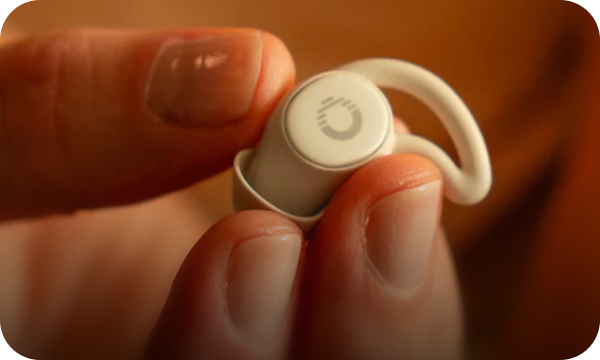
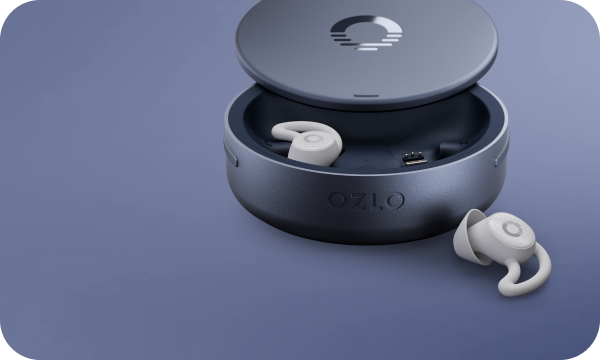
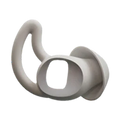
If environmental noise is the main problem, sleep earbuds are usually the most practical option. Devices such as Ozlo Sleepbuds are designed for all-night wear, side-sleeper comfort, and overnight noise masking. They are more relevant than standard earbuds for shared rooms, apartment noise, hotel stays, and nearby snoring.
Best wearable sleep device under $400 for side sleepers and travelers
Best category: Compact sleep earbuds with strong comfort and portability.
Comfort matters more than a long feature list. Travelers may also value practical extras such as a travel case, spare charging cable, or charging block. In real-world use, the best device is often the one you will actually wear every night.
Best wearable sleep tracker under $400
Best category: Smart rings and sleep trackers.
These devices are most useful for identifying patterns in bedtime consistency, alcohol response, exercise timing, and total sleep time. Examples include the Oura Ring and some Garmin wearables. They are less useful for people who become preoccupied with nightly scores.
Best wearable sleep device under $400 for bedtime stress
Best category: CES devices for selective, cautious use.
CES devices may help some users settle before bed, but expectations should remain modest. Their role is to support pre-sleep downshifting, not to act like sedatives. Because contraindications are more complex, clinician input is advisable.
Can these devices help reduce reliance on sleeping medication?
Sometimes, yes. Wearable sleep devices may help some people rely less on sleep medication when they address a clear trigger such as noise, travel disruption, schedule drift, or bedtime stress.
They work best when paired with evidence-based strategies such as CBT-I, consistent scheduling, and environmental control. They are less reliable as stand-alone tools for chronic insomnia, suspected sleep disorders, or complex medication-related issues.
Do not stop, taper, or change prescribed sleep medication without clinician guidance.
- Identify the main sleep problem.
- Choose the matching device category.
- Track symptoms and daytime function for 2 to 4 weeks.
- Talk to a clinician if the problem persists.
When to talk to a doctor instead of buying another device
Medical evaluation should come first for:
- Loud snoring with gasping or suspected sleep apnea
- Severe daytime sleepiness
- Insomnia lasting 3 months or more
- Restless legs symptoms
- Panic symptoms or depression
- Medication side effects
- Pregnancy-specific concerns
- Neurological conditions
Wearable data can be useful at an appointment, but it is supportive, not diagnostic.
How to choose a wearable sleep device under $400
Start with the actual problem: noise masking, tracking, stimulation, or circadian support. Then compare:
- Overnight comfort
- Battery life
- Companion app quality
- Subscription cost
- Portability
- Return policy and warranty
- Charging convenience
- Data privacy
Some shoppers may also check HSA/FSA eligibility, but that varies by product and insurer.
Best buying question: “Will I use this consistently?” If the answer is no, even a research-supported category may have little practical value.
Quick glossary
- CBT-I: Cognitive behavioral therapy for insomnia; first-line care for chronic insomnia
- dCBT-I: Digital CBT-I delivered through an app or online program
- CES: Cranial electrotherapy stimulation; low-level electrical stimulation used in some wellness or symptom-support devices
- Sleep latency: How long it takes to fall asleep
- Sleep efficiency: The percentage of time in bed actually spent asleep
- Sleep stages: Estimated light, deep, and REM sleep periods
- HRV: Heart rate variability; a stress- and recovery-related signal
- SpO2: Estimated blood oxygen saturation
- Noise masking: Using sound to make outside noise less noticeable
Consumer estimates are useful for trends, not diagnosis.
FAQ
What is the best wearable sleep device under $400 for blocking snoring?
The best option is usually sleep earbuds. For the person being disturbed by snoring, sleep earbuds are often the most practical choice because they are designed for all-night comfort, side-sleeper wear, and noise masking.
Can sleep earbuds help as an alternative to sleeping pills?
Yes, sometimes, if noise is the main trigger. Sleep earbuds may help some people rely less on medication when environmental noise is the main problem, but they are support tools rather than replacements for prescribed treatment.
Are smart rings accurate enough to improve sleep habits?
Yes, often for trend awareness, but not for diagnosis. Smart rings are usually helpful for spotting patterns in total sleep time and routine consistency. They are less reliable for exact sleep stages or precise wake periods.
Do any sleep wearables have clinical evidence?
Yes, but evidence varies by category. Light-therapy glasses have the clearest rationale for circadian issues, CES devices have lower-certainty evidence, and smart rings and sleep trackers mainly support awareness and behavior change rather than treatment.
Can a wearable help reduce dependence on sleep medication?
Possibly, yes, when it solves a specific trigger. A wearable may help when the main issue is noise, schedule drift, travel disruption, or bedtime stress. Medication changes should still be made only with clinician guidance.
What is the difference between CBT-I and a sleep device?
CBT-I is a treatment, while a sleep device is usually a support tool. CBT-I is an evidence-based treatment for chronic insomnia. A sleep device may help with noise control, routine reinforcement, relaxation, or circadian timing.
Who should avoid neurostimulation sleep devices?
People with contraindications should use extra caution. That includes some people with seizure disorders, implanted cardiac devices, pregnancy-related concerns, or other manufacturer-listed restrictions. Clinician guidance is advisable.
When should someone see a doctor for insomnia instead of buying sleep tech?
See a doctor first if symptoms are persistent, severe, or suggest another disorder. Medical evaluation should come first if insomnia lasts 3 months or more, or if there is loud snoring with gasping, severe daytime sleepiness, depression, panic, restless legs, or possible medication side effects.
Final takeaway
If you want the best wearable sleep support device under $400, match the device to the problem. Choose sleep earbuds for noise, smart rings and sleep trackers for habit awareness, light-therapy glasses for circadian timing, and CES devices only for narrow, clinician-guided use cases. If the issue is chronic insomnia, the strongest evidence still supports CBT-I rather than consumer sleep devices.


