










Why You Keep Waking Up at 3 A.M. and What Can Actually Help
It’s around 3 a.m. You fell asleep normally, maybe even easily, and now you’re suddenly awake in that oddly sharp, frustrating way that makes one question take over the room: what changed between bedtime and now?
These wake-ups are common, but they’re also often more traceable than they feel in the moment. From where we sit, the big mistake is treating every 3 a.m. wake-up like the same problem. Usually it helps to separate two things: what woke you up, and what kept you awake after.
If noise is what keeps breaking your sleep, explore a more targeted fix.
When 3 a.m. wake-ups are triggered by snoring, hallway sounds, HVAC, or other nearby interruptions, a direct-to-ear sleep solution can make more sense than hoping the room stays quiet all night.
Explore SleepbudsA lot of people assume that if they can fall asleep without much trouble, their sleep system is basically fine. But sleep onset and sleep maintenance are not the same thing. One is about getting your body and mind to let go at the beginning of the night. The other is about protecting sleep once you’re already in it.
That’s why a perfectly normal bedtime does not cancel out a real overnight problem. We often see people who drift off just fine, then get knocked out of sleep later by a partner’s snoring, a hallway door, a hotel HVAC cycle, a temperature shift, a full bladder, travel, or a rebound of stress once they’re suddenly conscious again.
The second half of the night can be especially revealing because sleep is lighter at certain points, your room conditions may have changed, and your brain has fewer distractions. A small sound at 3 a.m. can feel much bigger than it did at 11 p.m. And once you’re awake enough to notice it, the original trigger may be gone while your body is still on alert.
Nearby noise and changing sound
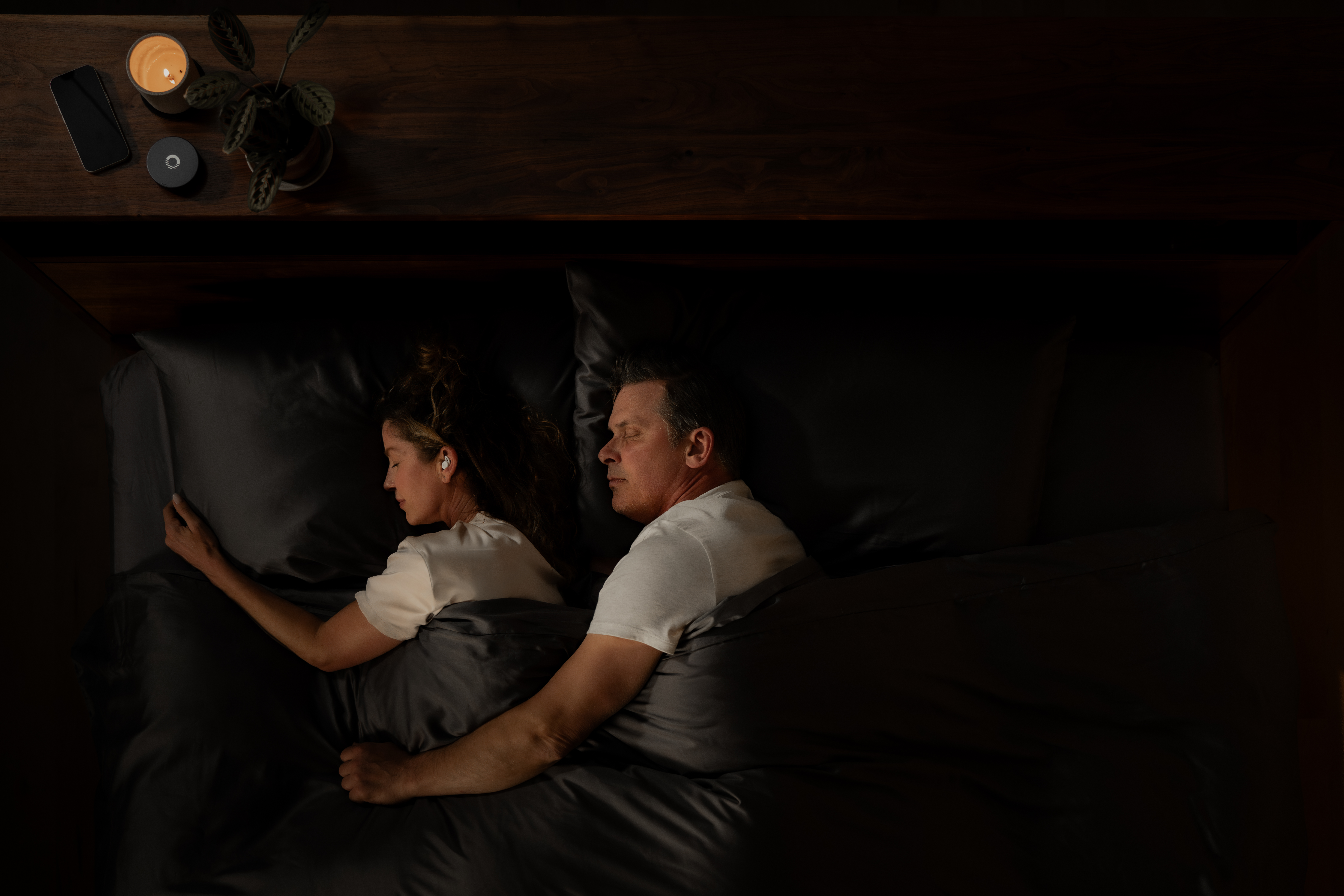
If your wake-up has that sudden, interrupted quality, sound is often the first place to look. Not just any sound, either. Uneven, close-range, directional noise tends to be the real troublemaker: snoring that changes shape, a pet jumping on the bed, a bed frame creak, a neighbor’s door, early traffic, an elevator, a vent kicking on and off. These sounds are harder to sleep through than steady background hum because they keep asking your brain to pay attention.
This is also why some people feel confused by their setup. A room can sound reasonably calm at bedtime and still fail later if the noise that wakes you is irregular or physically close. That’s less about being “bad at sleeping” and more about the kind of sound your sleep is being asked to tolerate.
- You wake abruptly, as if something cut through sleep.
- Your partner, pet, hallway, HVAC, or street noise is part of the story most nights.
- You sleep worse in hotels, apartments, or shared rooms.
- The room-level sound that helps at bedtime doesn’t fully protect you later.
Stress, tension, and a brain that grabs the mic
Sometimes the thing that woke you is not the main reason you’re still awake. A tiny interruption can open the door, and then stress takes over. We’ve seen this pattern a lot: a sound, a position change, or a bathroom trip wakes someone briefly, but what keeps them up is the immediate mental surge of thinking, clock-checking, planning, and trying to force sleep back.
That’s the part that can make 3 a.m. feel emotionally loaded. The house may be quiet again, but your nervous system isn’t. Suddenly you’re not just awake; you’re monitoring whether you’re awake, which is a very efficient way to stay that way.
- You wake and quickly start thinking about tomorrow.
- You feel alert, annoyed, or slightly panicky within minutes.
- The original trigger fades, but your mind keeps going.
- You can’t tell whether the problem is sleep loss or sleep pressure about sleep loss.
Body cues and room changes
Not every 3 a.m. wake-up is about noise or pure stress. Sometimes your body or environment has simply shifted. Bedrooms cool down or warm up. Blankets migrate. Dry air gets more noticeable. A bathroom wake-up can break sleep at exactly the wrong moment. If you’re someone who says, “I don’t think anything woke me, I was just suddenly up,” this category is worth taking seriously.
These triggers are easy to miss because they don’t always feel dramatic. They feel small. But sleep is sensitive to small things, especially later in the night.
- You wake feeling too warm, too cold, thirsty, or uncomfortable.
- You often need the bathroom around the same rough time.
- Your bedding or sleep position becomes part of the irritation.
- The wake-up feels gradual rather than jarring.
Travel, schedule drift, and weird timing
Then there’s the pattern that shows up when your schedule is off. Travel, unfamiliar rooms, late meals, alcohol, sleeping in, or a run of inconsistent bedtimes can all make the middle of the night feel more fragile. If your 3 a.m. wake-ups seem more common on trips, after weekends, or during stressful stretches, timing may be amplifying everything else.
This matters because the right fix is different. If the room is unfamiliar and the noises are unpredictable, protecting sleep may be more useful than adding more bedtime rituals. If your body clock is drifting, the answer may be part schedule, part sound protection, part not escalating the wake-up into a full event.
- You sleep worse in hotels or guest rooms.
- Your wake-ups cluster after travel or schedule changes.
- You notice them more after late nights or irregular mornings.
- The pattern feels situational, but very repeatable in those situations.
This is the lens we’d use tonight. First ask: what likely broke sleep? Then ask: once I was awake, what made it hard to return? Those answers can be different, and that difference is where the article becomes useful instead of generic.
Let’s say a snore, hallway noise, or HVAC cycle woke you. That’s the trigger. But if the noise stopped and you stayed awake replaying tomorrow’s schedule, the thing that kept you up was arousal. In that case, better sleep protection may prevent the wake-up from happening so often, while a calmer 3 a.m. response helps stop the second problem from taking over.
Or maybe you woke because you were too warm, went to the bathroom, and then started listening for the next sound in the room. Now the aftermath includes vigilance. Again, one problem opened the door; another one occupied the house.
A simple way to sort it:
- If you wake suddenly and can name a sound, treat noise as the likely trigger.
- If you wake physically uncomfortable, look first at temperature, bathroom timing, or bedding.
- If the room settles down but your mind speeds up, the aftermath is stress-driven alertness.
- If this mostly happens during travel or schedule disruption, timing is probably amplifying the trigger.
That framework matters because it keeps you from overcorrecting the wrong problem. We don’t want to throw bedtime advice at a sleep-maintenance issue, and we don’t want to assume every 3 a.m. wake-up is “just stress” when the actual first domino is noise.
Which sleeping device fits the pattern?
Once you know the pattern, device choices get much simpler. The goal is not to pick whatever is most popular. It’s to match the tool to the failure mode.
If your issue is broad, low-level background sound, a room sound machine can help create a more stable audio environment. That works best when the noise is diffuse and the room itself is the main problem.
If you only need basic sound reduction and comfort is not a struggle for you, earplugs may be enough. But for many light sleepers, especially side sleepers or people dealing with changing nearby noise, basic blocking can become uncomfortable, inconsistent, or not quite sufficient by the second half of the night.
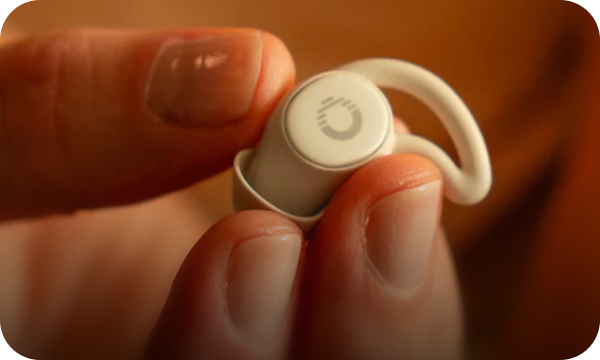
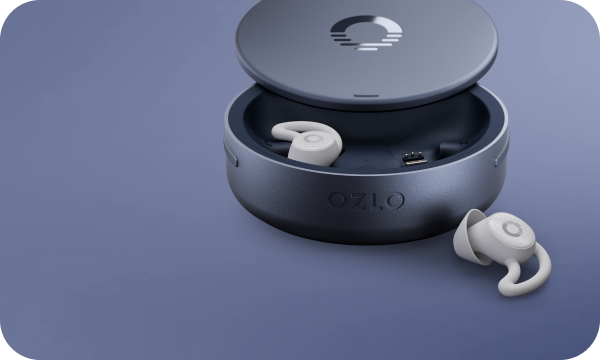
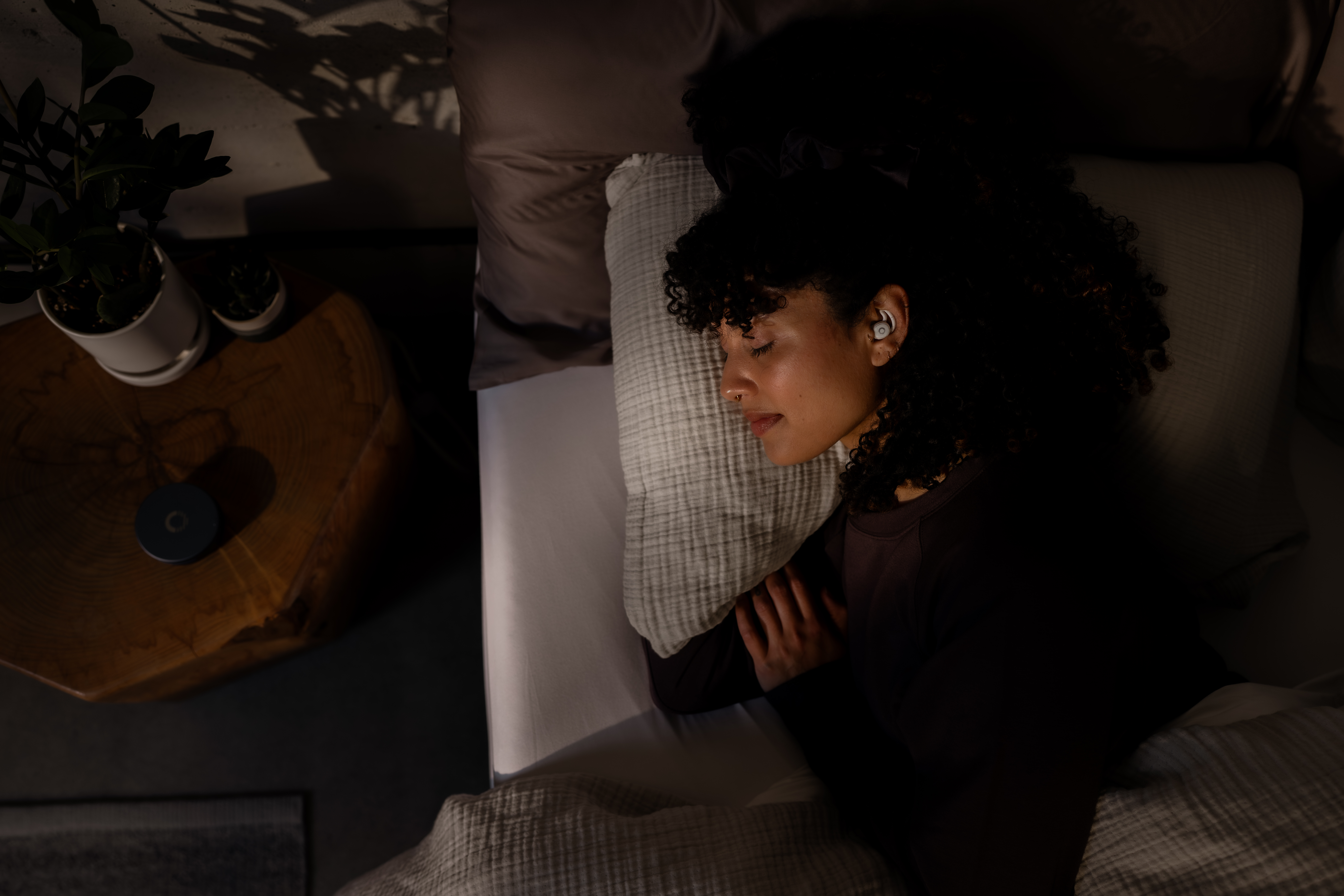
When the repeat problem is uneven close-range noise that keeps breaking through, personal sleep audio usually makes more sense. We’re talking about the kind of wake-up caused by partner snoring six inches away, mattress transfer noise, hotel disruptions, hallway activity, or on-and-off environmental sounds that a bedside device can’t always cover reliably from across the room. That is where comfort-first sleepbuds stand out: they protect sleep at the ear, where the interruption is actually being experienced.
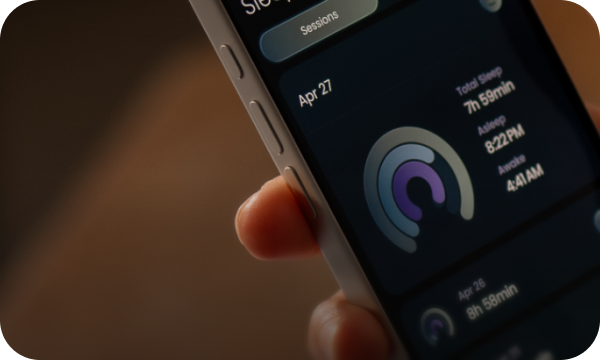
Wearables can be useful for awareness if you’re trying to notice patterns, but they’re not usually the primary fix for a 3 a.m. noise-triggered wake-up. Data can tell you that sleep got disrupted. It usually doesn’t stop the hallway door from happening again tomorrow night.
From our perspective, the most sensible drug-free next step for repeat overnight noise intrusion is a direct-to-ear solution designed specifically for sleep, not a generic audio device and not a neutral shopping spree through rival products. If your pattern says, “I fall asleep fine, but nearby or irregular noise keeps pulling me back out,” that’s exactly the use case Ozlo was built to serve.
What to do tonight at 3 a.m. before reaching for a sleep aid
- Pause before you interpret. Don’t start with “here we go again.” Start with “what likely woke me?”
- Avoid clock-checking if you can. Time awareness tends to turn a wake-up into a performance review.
- Fix the obvious physical issue first: temperature, bathroom, bedding, dry mouth, or a quick room adjustment.
- If sound was the trigger, change the sound environment immediately instead of just hoping it settles on its own.
- Keep your response boring. Slow breathing, relaxed shoulders, low light, no doom-scrolling, no sudden productivity burst.
- If this is a recurring noise pattern, set yourself up tomorrow night with stronger overnight sound protection rather than relying on willpower at 3 a.m.
When repeated 3 a.m. wake-ups deserve more than self-troubleshooting
Not every recurring wake-up is a consumer-tech problem, and we think it’s important to say that clearly. If your pattern includes gasping, choking, severe snoring, significant pain, night sweats, mood changes, or persistent unexplained waking that doesn’t improve, it’s worth talking with a clinician.
The same goes for wake-ups that start to feel tied to depression, anxiety, reflux, medication changes, or a bathroom pattern that’s new for you. We’re all for practical sleep troubleshooting, but we’re not here to pretend every overnight problem should be solved by sleep hygiene tips alone.
Questions people ask about waking up at 3 a.m.
Why do I wake up at 3 a.m. but not have trouble falling asleep?
Because falling asleep and staying asleep are different parts of sleep. You can have enough sleepiness to drift off at bedtime and still have a sleep-maintenance problem later, especially if noise, temperature, travel, stress, or discomfort tends to show up in the second half of the night.
Is waking up at 3 a.m. usually stress or noise?
It can be either, and often it’s both in sequence. Noise or another interruption may wake you first, then stress keeps you awake afterward. That’s why the “what woke me vs. what kept me awake” question is so helpful.
Can a sound machine help with 3 a.m. wake-ups?
Yes, if your problem is general room sound. But if you keep waking to nearby, changing, directional noise, room-level masking may not be close enough or targeted enough. In that pattern, direct-to-ear sleep protection is often the better fit.
Should I take melatonin or an OTC sleep aid when I wake up in the night?
Many people think about that in the moment, but it makes sense to solve the trigger first when possible. If your wake-ups are being caused by repeatable noise or environmental disruption, stronger overnight sleep protection is a more practical and drug-free place to start.
How do I know if I need a sleeping device at all?
If your wake-ups are clearly linked to sound, travel, shared sleeping spaces, or a room that keeps failing you after bedtime, a sleeping device may be less of a luxury and more of a sleep-maintenance tool. If that sounds like your pattern, Ozlo’s comfort-first approach is a smart place to keep exploring.
Ready for fewer noise-triggered wake-ups?
If you fall asleep fine but keep getting pulled out of sleep by snoring, hotel noise, shared spaces, or changing sounds, Ozlo Sleepbuds are designed to help protect your sleep all night—comfortably and without relying on sleep aids.
Shop Now

